
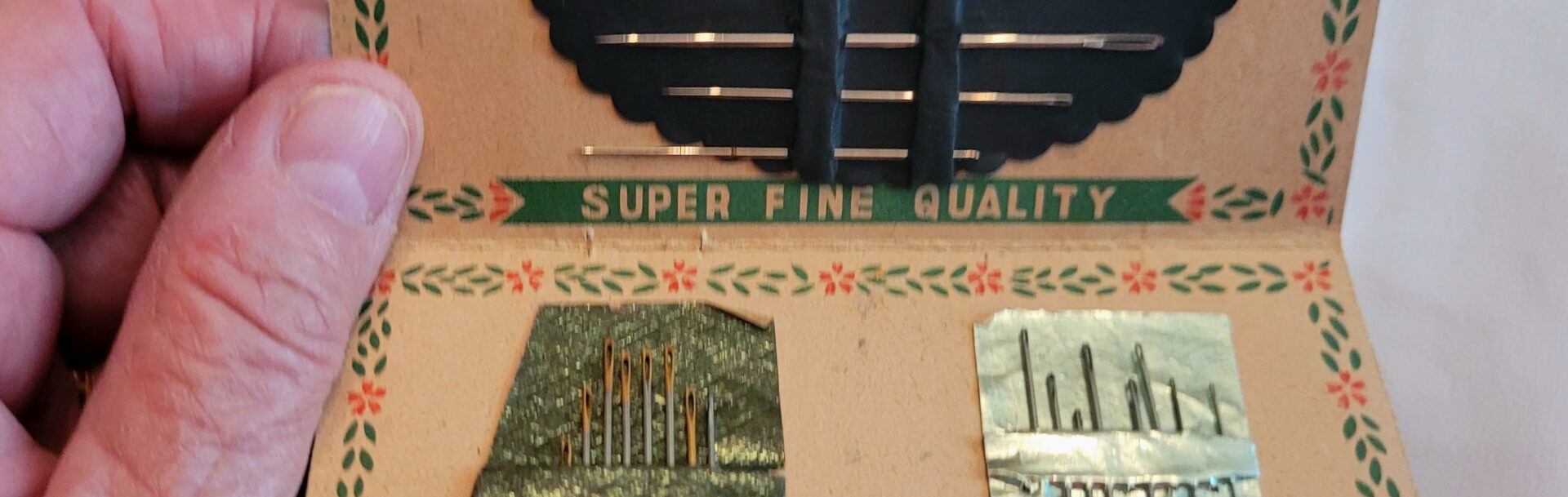
Sewing needles stored in needle booklets have a long history dating back to about late 1800’s, when hand sewing was a common activity. Making and mending clothing was essential to every household. Needles were precious and stored in homemade containers made of wood, bone, or textiles like felt and cotton.
While out shopping today, I came across this “Needle Book Sewing Basket” package still full of sewing needles. The outside is decorated with what looks like pink cherry blossoms on a green background, made in Japan. The reasonable price tag is $7, so I purchased it.
Unfortunately, when they packed and priced the item in a plastic bag, they put the staple in the edge of the vintage booklet. However, that’s OK since I carefully removed the staple to get the item out of the bag.
Needle Booklets in the late 19th Century
According to my online research, during the last 19th century, needle booklets began to appear as paper sleeves with Victorian-era decorations such as ladies in a sewing circle, peacocks, etc. These were often given to women as promotional gifts. Every homemaker wanted a fresh set of needles to sew with. At this time, many clothing items were still made at home.
Mid 20th Century to 1950’s
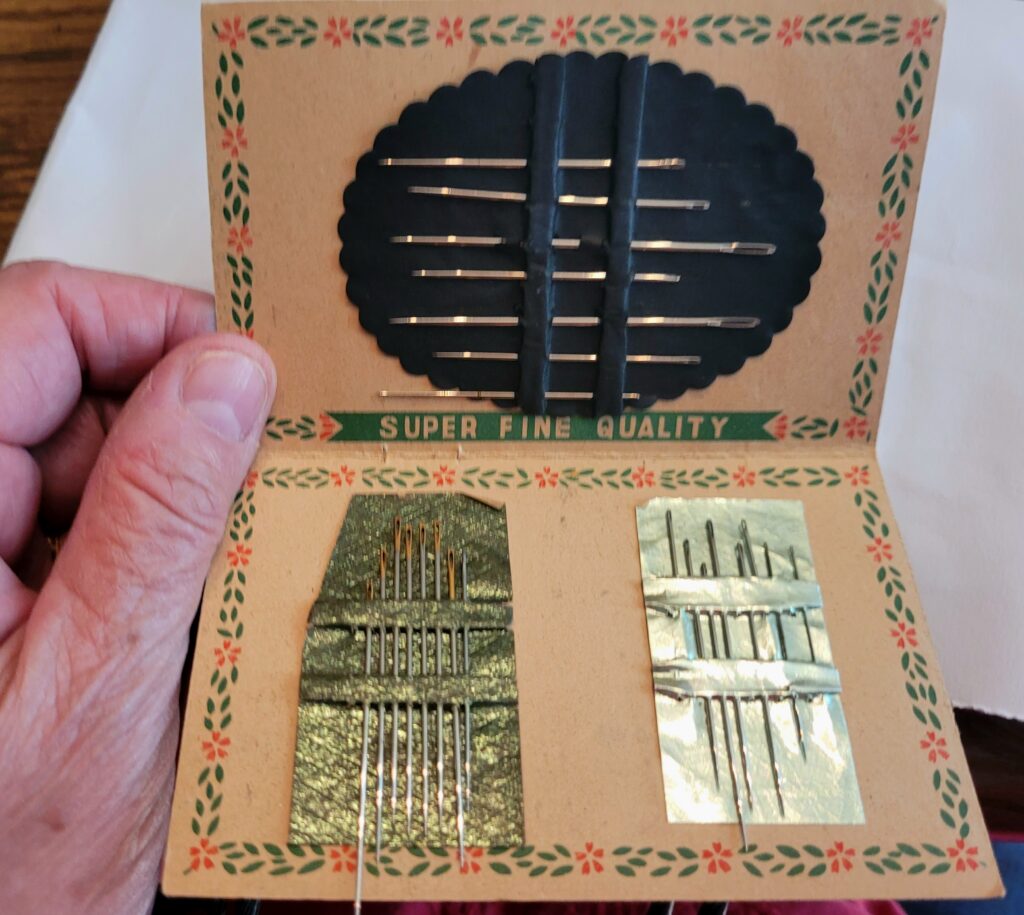
Needle booklets evolved to colorful promotional items. They typically measured approximately 6-inches by 4-inches often made in German or Japan. They included multiple needles and a needle threader.
Then graphics changed to more modern topics like travel, trains, rockets, etc.
Banks, savings and loans, and dry cleaners often gave them away free.
Cultural Role of Needle Booklets
They were popular since they were reusable and very useful. Also, they were inexpensive to produce often about 10 cents when sold in stores. People also liked the attractive graphics and held on to them for decades.
I believe some of my first handsewn items were probably doll clothing. I could cut; hand sew and tie a new dress on my doll. Those dolls stood on their toes with high heels great for any outfits I could think up. We, generally, had a large bag of fabric scraps which was perfect to use for new doll clothing.
Making “high fashion” doll clothing then led into making real clothing for myself. At one time, I was quite the seamstress and even won a sewing award.
Ending Notes in Needle Booklet Blog
But back to the blog, by 1960’s needle booklets were replaced by plastic boxes or sleeves without graphics. As sewing machines became more popular, hand sewing declined.
Today, needle booklets are still collected for their never-ending charm from a bygone era. They show another side of everyday life.
Do you ever use a needle and thread to sew on missing buttons? (That’s what most often pops off in my wash).
Resource Sites: Etsy, Copilot Search, and Worth Point site.